
Initial Requirement:
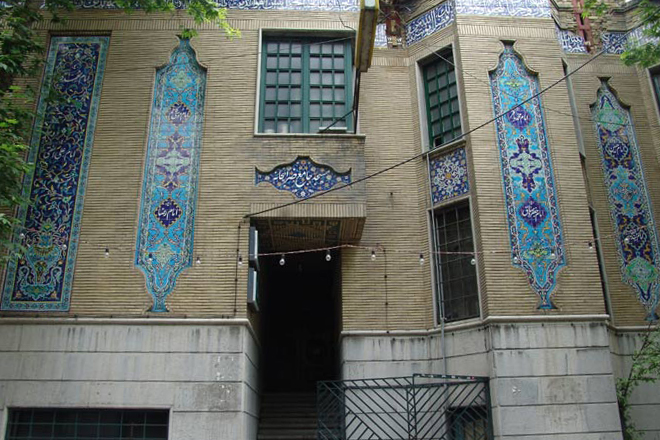
Ghadir Khomeh Mosque, located at the Zarabkhaneh crossroads in Pasdaran, Tehran, during the complete renovation of the complex, aimed to redesign its ventilation and cooling systems comprehensively, in a manner suited to the specific use of each space.
The main challenge of this project was to provide stable cooling during the busiest occasion of the year on the hottest summer day—a condition that generates an extremely high thermal load.
Additionally, the complex included diverse areas such as the main prayer hall (Shabestan), an assembly hall, cultural rooms, classrooms, and administrative offices, each with different cooling requirements. The client’s goal was to achieve a system that, while performing reliably at peak loads, would also allow individual control and energy optimization.
Solution:
After carefully analyzing the space usage and layout, our technical team designed a hybrid cooling system for the mosque.
For the main prayer hall and densely populated areas, a 220-ton water-cooled screw chiller combined with two central air handling units (AHUs) was proposed and implemented. This combination provides stable and quiet operation even under high temperatures and heavy thermal loads, ensuring uniform and comfortable air distribution.
For the cultural areas, classrooms, and administrative offices requiring independent control, a separate air-cooled scroll chiller with fan coil units was installed.
This design allowed each section of the complex to be controlled independently and minimized energy consumption during periods of low load.
The layout of piping, placement of the cooling tower and air handling units, and the selection of low-noise equipment were all planned to preserve the tranquility of the religious environment while enhancing the system’s thermal efficiency.
Result:
With the successful implementation and installation of the new equipment, Ghadir Khomeh Mosque in Pasdaran now benefits from a hybrid, stable, and intelligent system capable of delivering optimal and uniform cooling even under maximum occupancy and high temperatures.
Cultural and administrative areas, using the separate chiller, are independently and efficiently controlled, leading to significant energy savings and extended equipment lifespan.
This project stands as a successful example of multipurpose design and precise engineering of a ventilation system for religious and cultural spaces, providing fully reliable, energy-efficient, and quiet operation while maintaining the serenity of the environment.